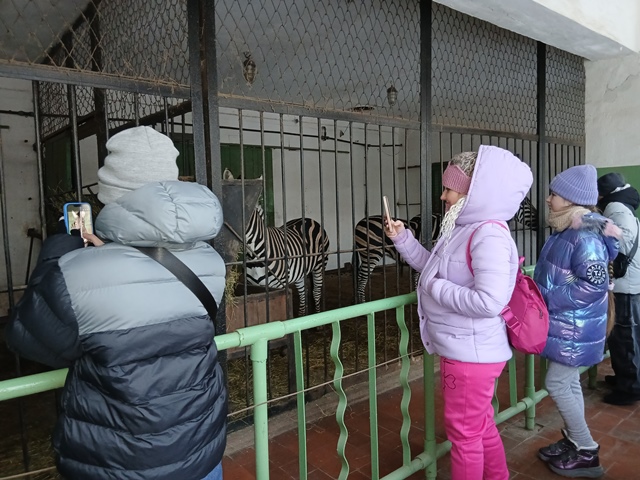
The message of the column "School of the Young Zoo Correspondent” today is dedicated to the International Zebra Day. Young biologists visited our zebras, prepared a story about them and took interesting photos.
“Every year on January 31, the world celebrates International Zebra Day. This is not just a holiday, but a reminder of how important it is to preserve striped beauties. In Mykolaiv, this mission is taken seriously: the zoo is a place where the zebra population is not just maintained, but also successfully grows. These animals reproduce in the zoo, the offspring are sent to other zoos.
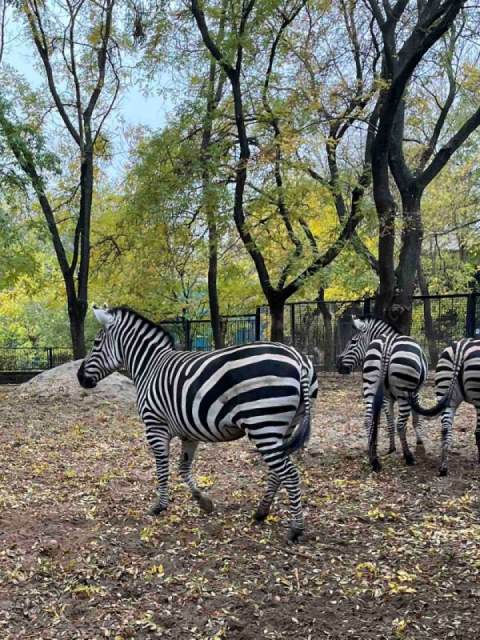
The largest modern zebra species is the Grevy's zebra. Its mass reaches 350-450 kilograms, and its height is 1.4 meters. Our zoo kept a pair of Grevy's zebras from 1986 to 1988. The smallest modern zebra species is the mountain zebra, which is only 1.2 meters tall and weighs 250-300 kilograms. Currently, the zoo keeps Chapman's zebras (Equus quagga chapmani) (a subspecies of the plains zebra).
Currently, there are four Chapman's zebras in Mykolaiv Zoo: Aladdin, Bianca, Baira and Asba. The first of all these zebras to come to us was Aladdin. He was born on June 20, 2009 and came to us on October 22, 2012 from Limpopo Zoo, that is in Drohobych. The second to come was Bianca, who was born on August 16, 2015 and came to us on February 12, 2016 from Drohobych, like Aladdin. The first offspring of Aladdin and Bianca was obtained in 2019, when Basar was born on July 27. He went to the zoo in Kovalivka on November 16, 2025. The second youngster of this pair was Baira, who was born on May 6, 2021 and is kept with her parents and her sister Asba, who was born on June 17, 2023, already during the war.
Zebras are not only beautiful stripes (which, by the way, are unique for each individual, like fingerprints). They are animals with a difficult character. They can be aggressive and bite, so caring for them requires experience. When young males (like Basar) grow up, they begin to compete with their father. That is why they are sent to other zoos to create their own families.
The basis of the zebras' menu is hay, oats, and fresh grass in the summer. We brought apples as treats for them.
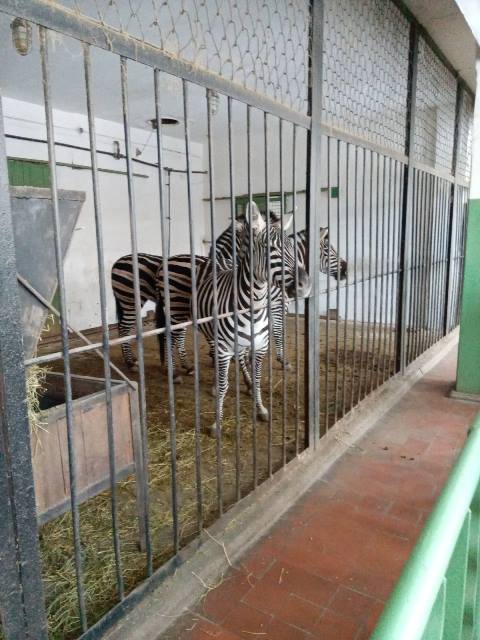
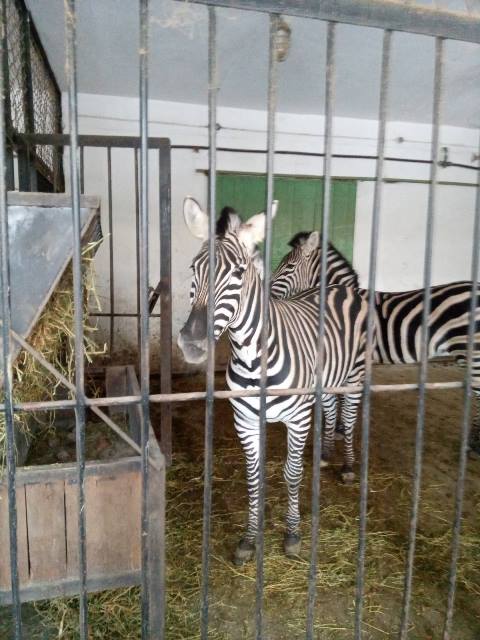
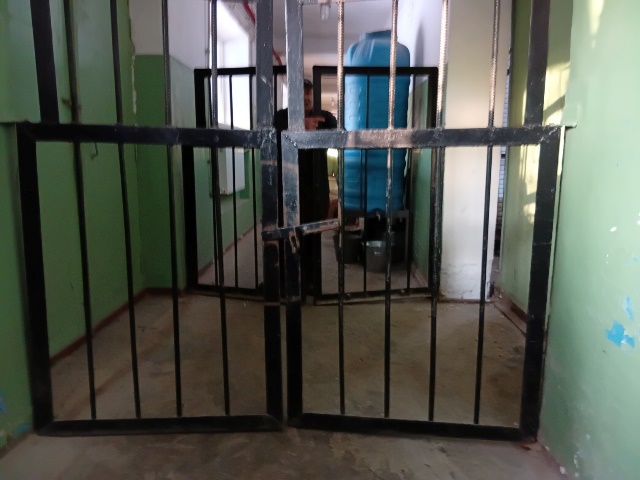
We saw the warm enclosures where zebras are kept in the winter, saw the original system of moving these animals from the winter to summer enclosure, and learned about the peculiarities of caring for the wayward striped beauties.
Now, while it is cold outside, the whole family is in a warm winter room, but with the arrival of spring warmth, they will again delight visitors in the open air."
(The report was prepared by young biologists Artem Ovsianov and Mykyta Kovalenko. Photos by young correspondents Artem Ovsianov, Maria Borushko, Oleh Kovalenko)