All over the world, April 27 is celebrated annually as World Tapir Day. This day was first celebrated in 2008. Its purpose is to draw attention to the need to protect these unique animals.
Tapirs (Tapirus) are among the most ancient mammals that have survived to the present day. Their ancestors existed as far back as 55 million years ago, and the appearance of modern species has remained almost unchanged over the past 20 million years. In fact, they have survived several mass extinction events.
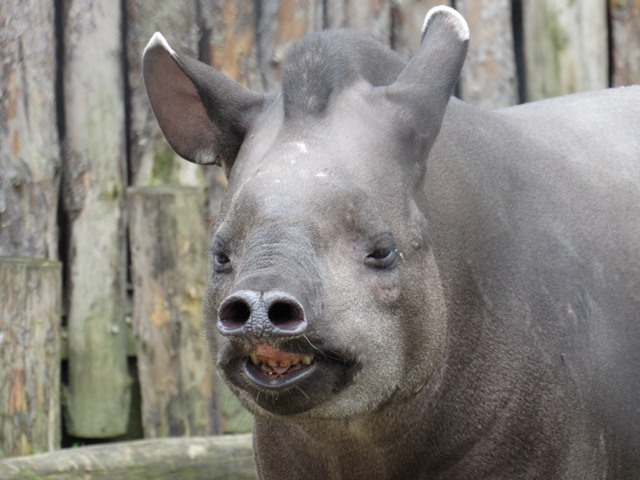
It may seem that a tapir is made up of parts of different animals: some think it looks like an elephant, others like a pig, and others like a small hippopotamus. In reality, this animal is related to horses and rhinoceroses.
Tapirs inhabit the jungles of South and Central America as well as Southeast Asia. Today, there are five species of tapirs. Unfortunately, all of them are classified as either “Vulnerable” or “Endangered.”
These animals have a lot of enemies: crocodiles, jaguars, bears, tigers… But their most dangerous enemy remains humans. Poachers kill them for their meat and skin, and deforestation for agricultural land destroys their natural migration corridors.
Tapirs require large territories to find a variety of food. When forests are fragmented by roads or farms, populations become isolated. This leads to reduced genetic diversity. Moreover, tapirs are among the “slowest” animals in terms of reproduction. Pregnancy lasts 13-14 months, a single calf is born, and the interval between births is 2-3 years. As a result, populations recover extremely slowly.
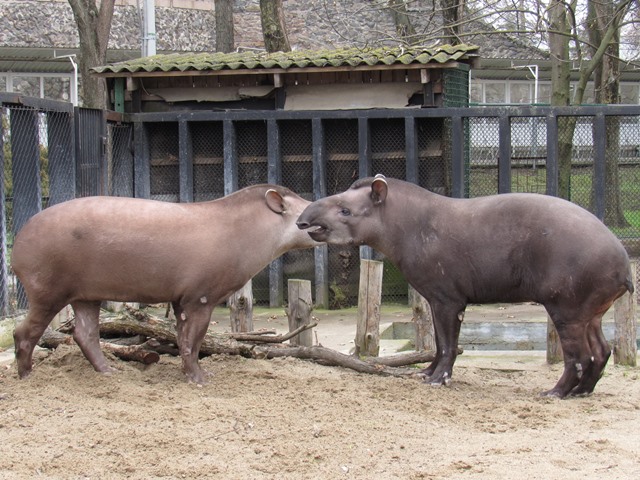
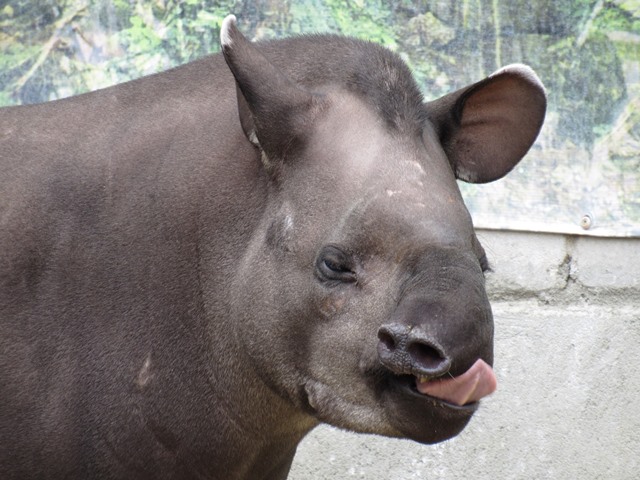
At Mykolaiv Zoo, two male lowland tapirs (Tapirus terrestris) are kept. They arrived on July 3, 2016, from Italy. Their names are Piro and Sol. They have very different personalities, but they are equally loved by all the staff and visitors of our zoo.
Tapirs survived the Ice Age, but they may not survive the age of humans. Today, their main threat is not jaguars, but the loss of their habitat. Every new road in the jungle is like a wall that separates tapir families and deprives them of a future. Perhaps breeding these animals in zoos will help preserve them.